Species Info
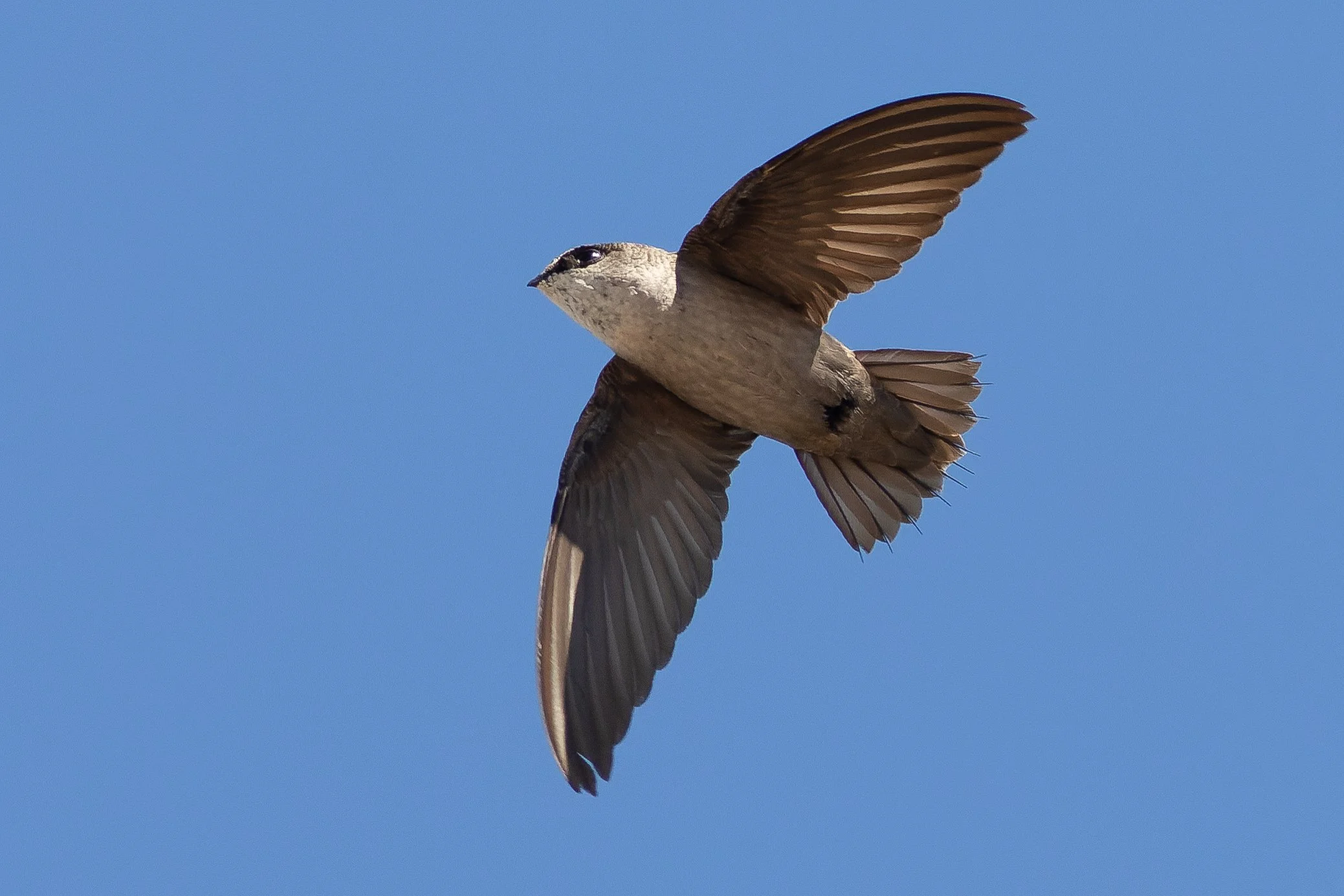
Photo by Joachim Bertrands
Pronunciation and Taxonomy
The name is pronounced voxes (rhymes with "boxes"), honoring William Sansom Vaux, a 19th-century American mineralogist and naturalist. Vaux's Swift (Chaetura vauxi) belongs to the family Apodidae — from the Greek for "without feet" — a reference to the tiny, nearly vestigial legs that make perching on horizontal surfaces impossible. Swifts can cling to vertical surfaces but cannot walk or stand. Nearly every non-nesting activity in their lives occurs on the wing.
Identification
Vaux's Swift is the smallest swift in North America, measuring roughly 10–11 cm (4–4.4 in) in length and weighing around 18 grams — lighter than a AA battery. Its body is cigar-shaped with long, stiff, crescent-shaped wings and a short, bluntly squared-off tail. Plumage is dusky gray-brown above, slightly paler on the throat and rump. The sexes are identical in appearance. In flight, the wingbeats are rapid and stiff, interspersed with short glides. Vaux's Swift can be distinguished from the closely related Chimney Swift (Chaetura pelagica) — its eastern counterpart — by its smaller size, paler underparts, and brownish (rather than grayish) rump.
Range and Migration
North American populations breed from southeastern Alaska south through British Columbia, Washington, Oregon, and into central California, with inland populations extending to western Montana. In Washington State, migration occurs from late April to late May in spring and from mid-August through late September in fall.
The birds winter from central Mexico through Central America, where resident (non-migratory) populations also breed year-round. Those southern populations are sometimes treated as a separate species, the Dusky-backed Swift (Chaetura richmondi). Vaux's Swifts migrate during daylight hours, traveling in flocks that may associate with other swift species, particularly at weather fronts.
Vaux’s Swift migration route. Source: Audubon Migration Explorer
Habitat
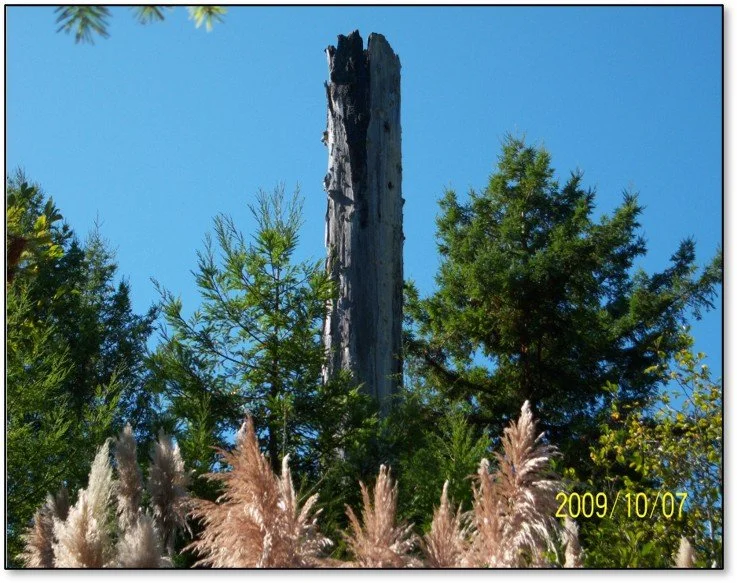
During breeding season, Vaux's Swifts are strongly associated with mature and old-growth forest. Forests dominated by coastal redwood, western redcedar, western hemlock, Douglas-fir, grand fir, and ponderosa pine support the largest breeding populations, as these trees are most likely to produce the large hollow cavities the birds require. Population declines during the 1970s and 1980s tracked closely with the accelerating loss of old-growth timber.
Outside the breeding season — and increasingly during it — Vaux's Swifts use large brick and masonry chimneys for communal roosting, particularly during migration stopovers in urban areas. As suitable hollow trees have become scarcer, chimneys have taken on greater ecological significance for the species. However, changes in building codes requiring chimney liners, combined with the capping or demolition of older industrial and institutional chimneys, have reduced the availability of these substitute roost sites as well.
Nesting and Reproduction
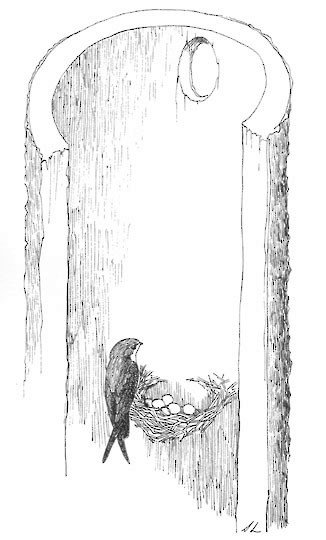
Nests are built inside hollow trees or, less commonly, chimneys. The nest is a small, saucer-shaped cup of loosely woven twigs or conifer needles, cemented to a vertical interior surface using the bird's sticky saliva. Clutch size is typically three white eggs, laid between March and July. Both parents incubate the eggs and feed the young. In some documented cases, a third adult participates in feeding nestlings, suggesting that cooperative breeding — as observed in Chimney Swifts — may occur in this species as well.
Mating occurs in flight, with the male briefly riding on the female's back during a glide. Vaux's Swifts do not defend territories; multiple pairs may nest in the same tree without conflict.
Foraging and Diet
Vaux's Swifts are aerial insectivores, feeding entirely on flying insects captured in flight. Their wide, gaping bills function as efficient traps as they fly through swarms of what researchers sometimes call "aerial plankton." Documented prey items include leafhoppers, flies, mayflies, and flying ants. Foraging occurs over a wide range of habitats — forests, grasslands, lakes, rivers, and urban areas — wherever flying insects are abundant. When feeding nestlings, adults collect a bolus of insects in the throat pouch and carry it back to the nest; adults typically forage within a quarter mile of the nest site when young are present.
Communal Roosting
The behavior that draws thousands of observers each fall — enormous flocks spiraling into a chimney at dusk — is a pre-migratory and migratory roosting phenomenon. As birds congregate before and during southbound migration, roost sizes can swell dramatically. Single chimneys have hosted tens of thousands of birds in a single evening. The vortex behavior, in which birds circle in increasingly tight spirals before suddenly diving into the roost entrance in rapid succession, is not fully understood but is thought to serve social and thermoregulatory functions.
Conservation Status
Vaux's Swift is not currently listed as threatened or endangered under the U.S. Endangered Species Act, but population trends are a concern. The species' dependence on old-growth forest for breeding — combined with the ongoing loss of accessible chimney roost sites — leaves it vulnerable to compounding habitat pressures across its range. Long-term monitoring, roost site preservation, and public awareness are the primary tools available to support stable populations. That work is what Vaux's Happening is for.