On top of a 1930s brick schoolhouse in the middle of Monroe, Washington, stands a chimney built in 1939. Vaux's Swifts — the smallest swift in North America — have come to depend on structures like it. The birds historically roosted in hollowed-out old-growth trees, but as old-growth snags disappeared across the region, the swifts have increasingly turned to man-made chimneys instead.
Our awareness of the importance of the Monroe chimney is a relatively new revelation. The birding community wasn’t aware of the roost until the fall of 2004 when a few posts about it appeared on the birding listserv Tweeters (although one local resident later claimed to have known about the swifts roosting in the Monroe chimney for 40 years). Even as late as July 2008, most residents of Monroe still had no idea their town hosted a twice-yearly bird spectacle during spring and fall migration.
The Monroe Chimney: Where It All Began
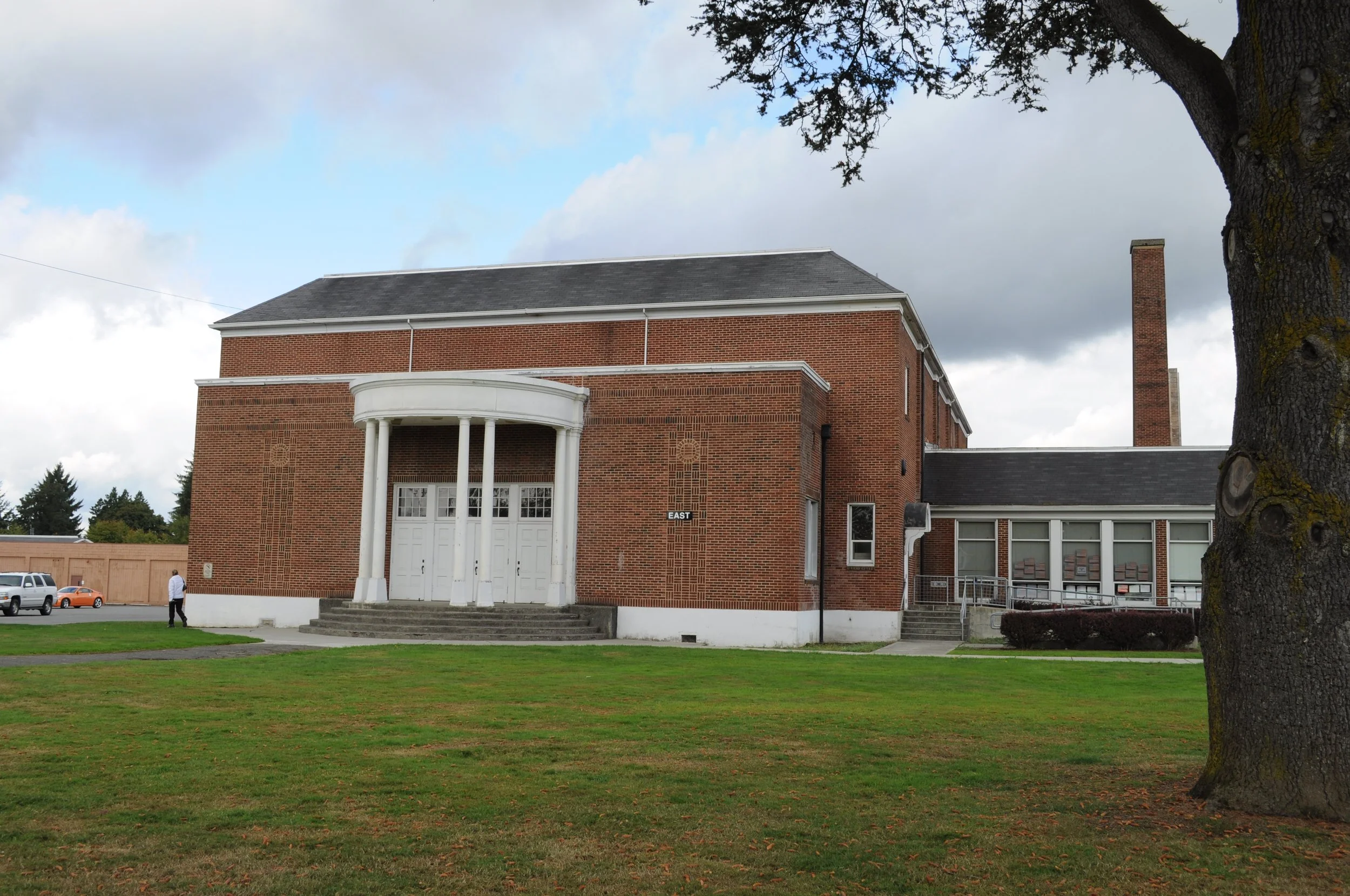
Frank Wagner Elementary School, September 2009
The Threat
In 2007, the Monroe School District, citing concerns about the aging chimney's ability to withstand an earthquake, planned to demolish it. By one account, officials at the time didn't realize the animals roosting inside were birds at all — they thought they were bats.
What was at stake was more than an old chimney. The site had become a critical migratory stopover for Vaux's Swifts, one of a shrinking number of places along their route where large numbers of birds could safely roost.
The Rescue
Word of the demolition plan reached local birders and Audubon chapters, and a coalition quickly formed. Pilchuck Audubon, Eastside Audubon, and Seattle Audubon (now Birds Connect Seattle) worked together to save the chimney. The effort was informally dubbed "Operation S.O.S. — Save Our Swifts."
A public meeting was held at the Monroe School District Administration Board Room to discuss alternatives to demolition. This rescue effort became the starting point for what would grow into the ongoing Vaux's Happening monitoring project.
The Proof
To make the case for saving the chimney, volunteers set out to document just how important the Monroe site was. In spring 2008, of the 183,463 Vaux’s Swifts documented using chimneys across Washington State, 70% occurred at the Monroe chimney.
On the night of May 7, 2008, volunteers counted 21,027 swifts entering the chimney — a single-night count large enough that it likely ended any further discussion of shortening or removing the structure. The case for the chimney's importance had been made not by argument, but by numbers.
Securing the Site
With the chimney's significance established, the effort shifted toward securing its future. The project received $100,000 in state funding in 2007 to fund a seismic retrofit, with an engineering study leading to a completed seismic upgrade in 2009. Cameras were also installed during renovations, allowing volunteers and the public to monitor the birds directly.
Recognition followed. The chimney was designated a globally Important Bird Area, and is now grouped together with three other Washington chimneys as part of a recognized "chimney corridor" for the species. In 2016, the city of Monroe named the Vaux's Swift its official city bird. The following year, the city commissioned sculptor Kevin Pettelle to create "Wagner Swifts," a public sculpture erected on Main Street about a half-mile from the chimney itself.
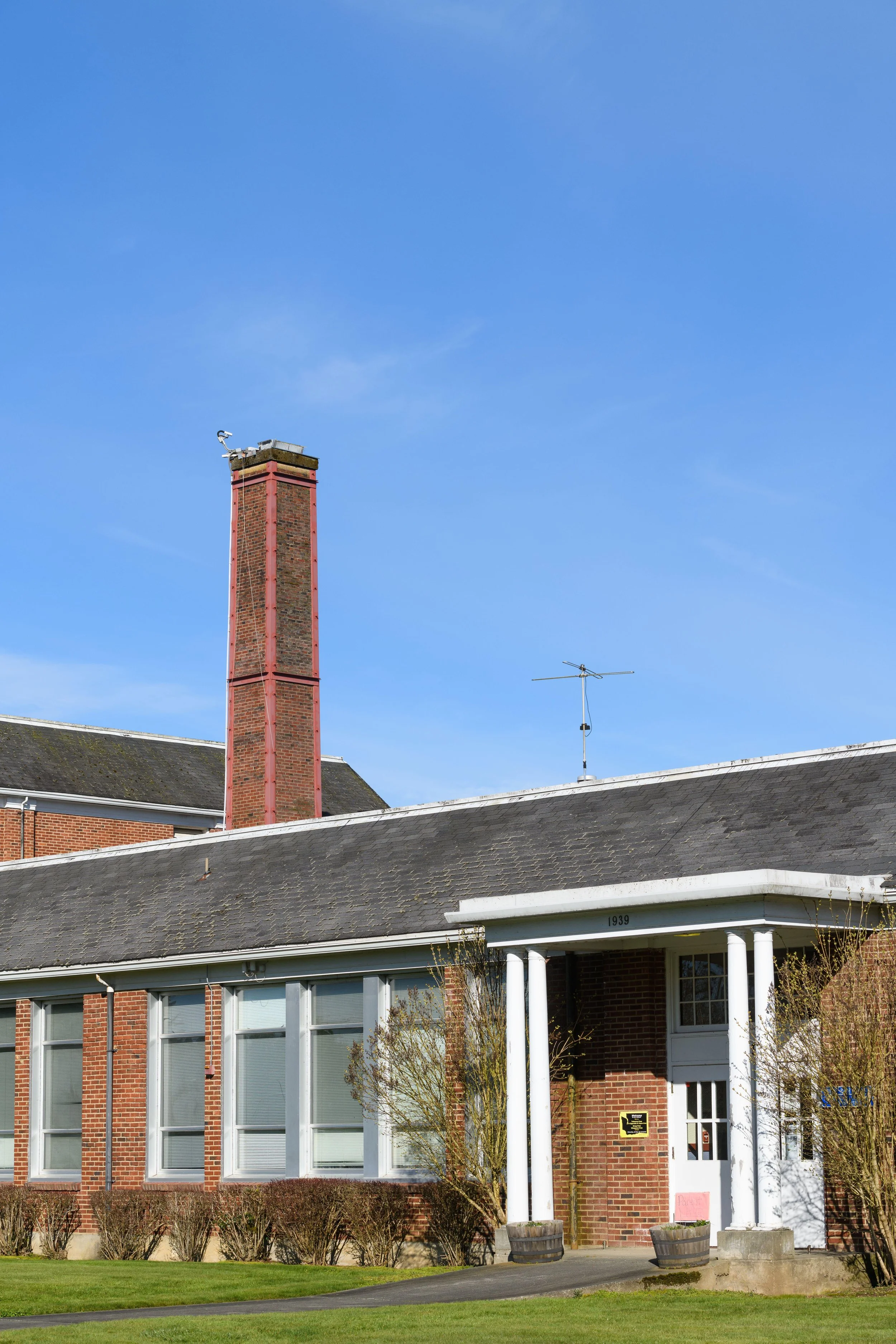
After earthquake retrofits, Frank Wagner Elementary School
Ian Dewar
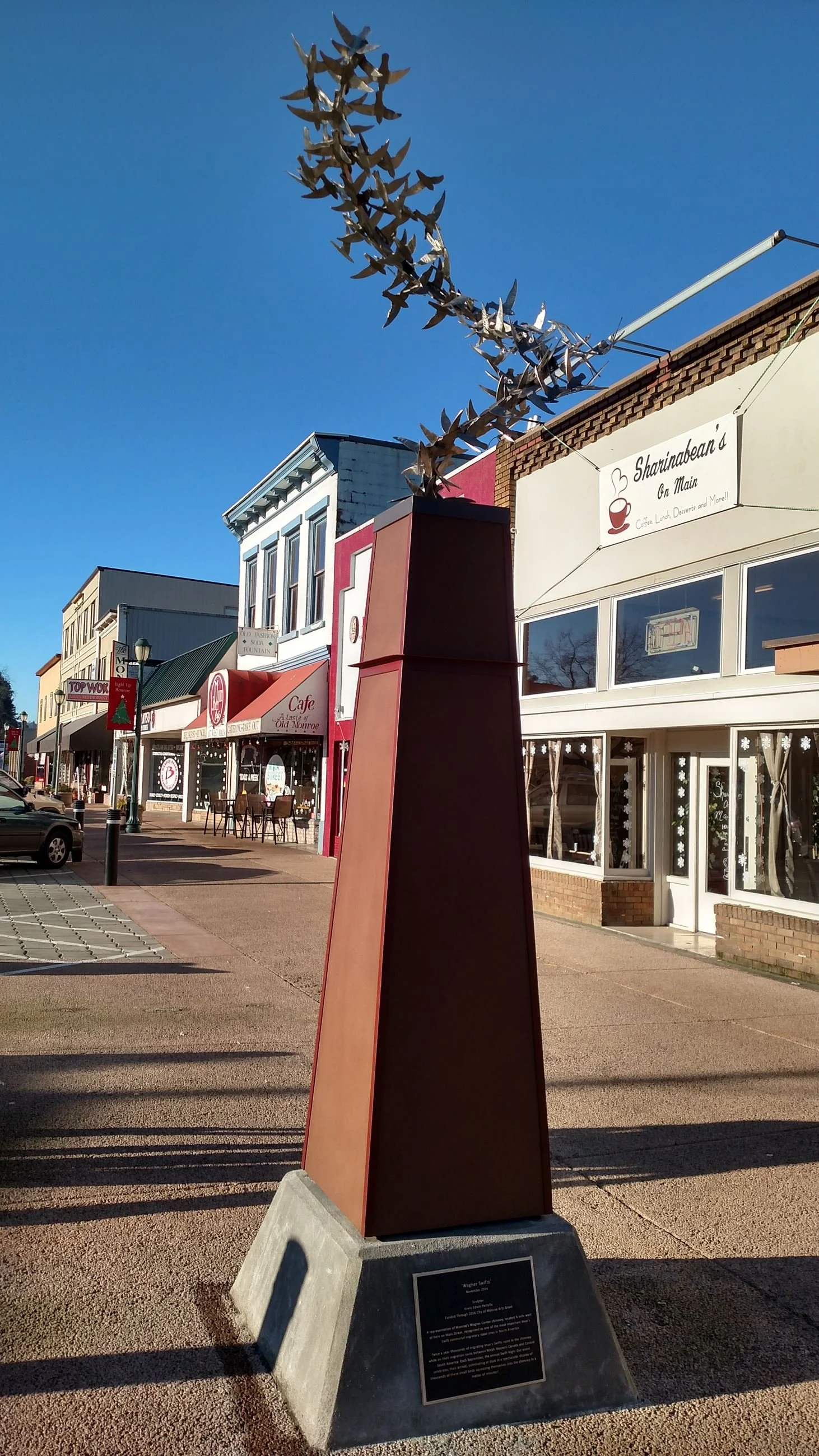
Wagner Swifts. Sculptor: Kevin Edwin Pettelle
Photo: City of Monroe
The Roost Today
The former Frank Wagner Elementary School building is now the Wagner Performing Arts Center, and the chimney remains active. Counts vary considerably from year to year — as many as 26,000 swifts have been recorded entering in a single night, while other nights have drawn only a handful of birds, depending on weather, insect activity, and migration timing.
Volunteer counters have continued monitoring the roost for years, sustaining the same tradition that first proved the chimney's importance back in 2008. Each fall, Pilchuck Audubon hosts an annual "Swifts Night Out" event at the site, where the public can gather at dusk to watch the swifts pour into the chimney — a continuation of the same community effort that saved it in the first place.