Temperatures Inside the Chimney
By Larry Schwitters
What's the big attraction? Why do ten thousand small swifts seem compelled to stuff themselves in an old brick chimney for the evening? Here are some ideas.
If the chimney has a small enough opening, predators won't be able to "get" them. Vaux's Happening has documented a Cooper's Hawk going a short distance down the Monroe Wagner chimney attempting to snag a swift. Our security cameras have captured this event at least twice. A Barn Owl was seen flying into and catching swifts at the biggest-holed chimney of the three McNear Brick and Block roosts. But once they get in the chimney and down a ways, as far as we know, the swifts don't need to worry about predators.
The joints between common bricks have just the right spacing (2.25 inches) for the 4.5 inch long swifts to cling to while overlapping the swift hanging onto the next joint up.
Inside the chimney they're out of the wind.
Inside the chimney they're out of the rain. This isn't a sure thing. The swifts prefer the chimney wall that faces the direction the wind is blowing. The bird above them may also catch some precipitation headed their way. If the chimney has a taper, that may make it more difficult to cling to, but all walls could be out of the rain if there's no wind.
So inside the chimney the Vaux's Swifts are safe and dry and... WARM?
The birds can share their body heat. The more swifts the better if it's heat you want. Do the birds snuggle together? Our inside-the-Monroe-Wagner-chimney camera has confirmed that they do. They also might make a pile, swifts clinging to swifts that are clinging to swifts clinging to bricks.
But might the evening air be warmer inside a brick roost site, even with no birds, than it is outside? In April of 2012, Vaux's Happening committed to answering that question.
The Setup
We briefly considered sticking a $10 residential outdoor thermometer down inside the Monroe Wagner chimney where our inside camera could see it, but we went with a more sophisticated option: LogTag electronic temperature recorders. Vaux's Happening ordered three of these fat, credit-card-sized units along with a computer-linked docking station. Their performance has been flawless, recording the temperature to the nearest 1/10 of a °F every 15 minutes. After nearly 11 months and four deployments, they're still functional and blinking that they're ready for more.
We hung one encased logger one meter down and another four meters down the chimney.
On April 10 we got up on the Wagner roof and climbed our 40-foot ladder. We located the third logger outside, two meters up the west chimney wall. We retrieved the units 29 days later and downloaded the measurements.
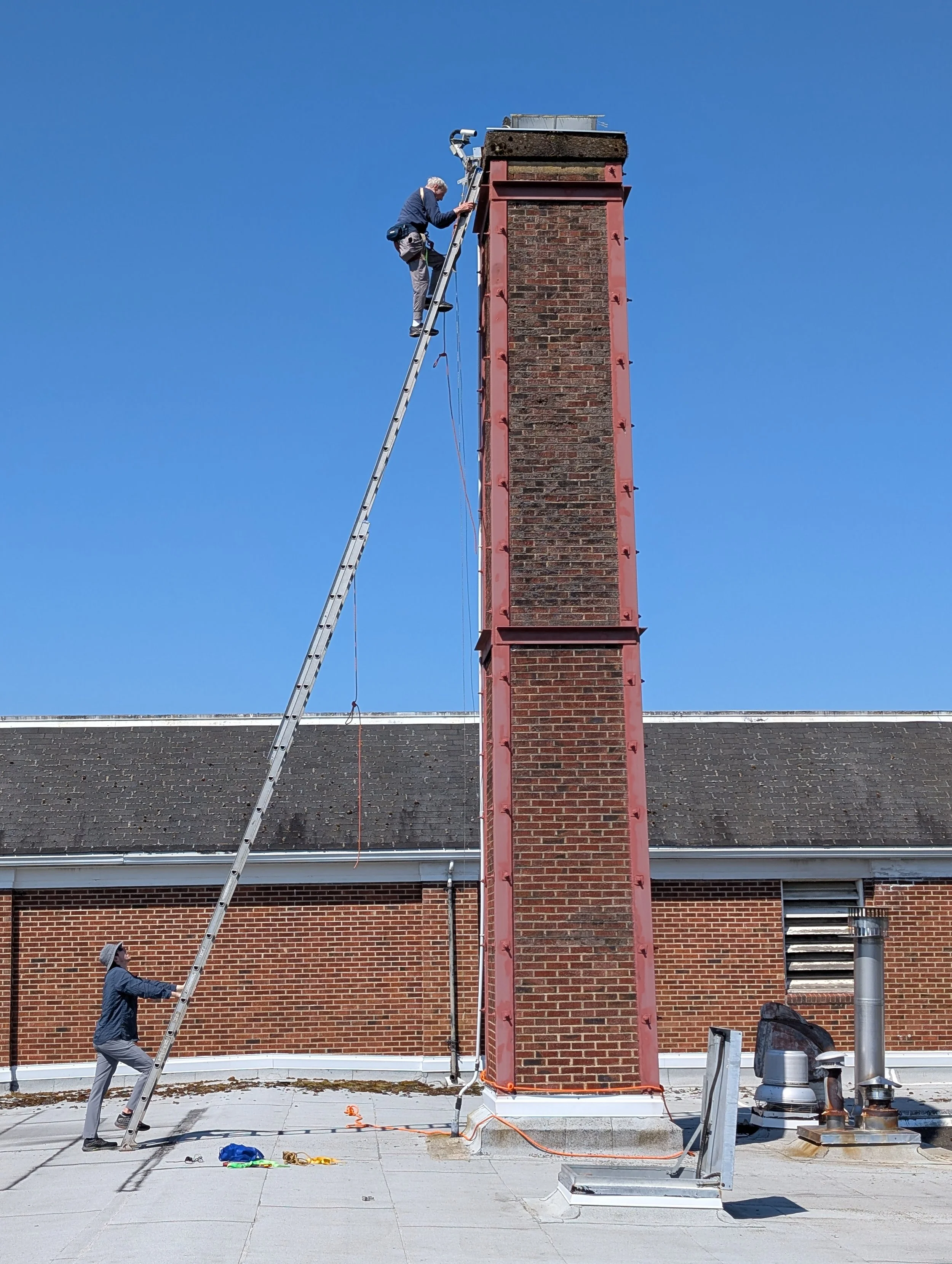
Climbing the chimney to install temperature loggers.
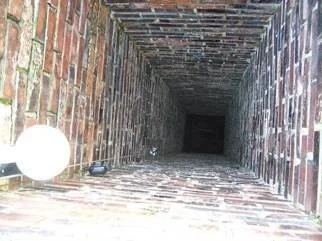
Temperature logger placement inside the chimney, with the inside camera visible.
What We Found
For a 24-hour period from April 13-14, 2012, the outside temperature ranged from 32 to 92°F, a difference of 60 degrees. Inside, the low was 51 and the warmest recorded temperature was 64, just a 13-degree range. The high and uneven outside recorded temperatures are probably the result of direct sunlight falling on the logger.
The greatest temperature difference between outside and inside was 26 degrees, in the middle of the night. Stone, concrete, and brick are materials with a high thermal mass. They absorb the sun's energy (heat) during the day and then slowly release it after the sun goes down and the outside air cools. Twenty-six degrees is a lot. I was expecting maybe five. Inside that chimney is a great place for a swift, or ten thousand swifts, to spend the night.
It seems there's little difference in being inside at four meters versus one meter down, no more than two degrees. Here's how a few thousand swifts affect that. It's easy to see what time the flock came to roost.
Rain really changes things. Looks like the swifts went to bed early.
Does Swift Count Affect Temperature?
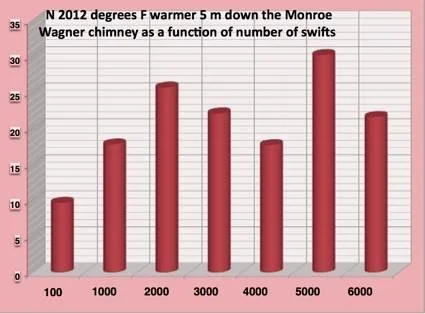
Is there a relationship between how many swifts are in the chimney and how warm it is inside? One would expect so, but do our measurements confirm that? Kind of. The problem is that the heat is where the swifts are parked, and that might not be too close to a temperature recorder.
The chart below compares how much warmer it was five meters down the Wagner chimney than outside, for six different evenings with increasing numbers of swifts. The temps are averages from the times the swifts were in the chimney. The chart shows a less-than-perfect relationship, but it certainly suggests it.
Apparently, the farther down the chimney you go, the warmer it gets, perhaps 0.7°F for each meter below one meter. So as the evening progresses and the air temperature drops, the swifts move down the chimney. On the cool nights they pile up.
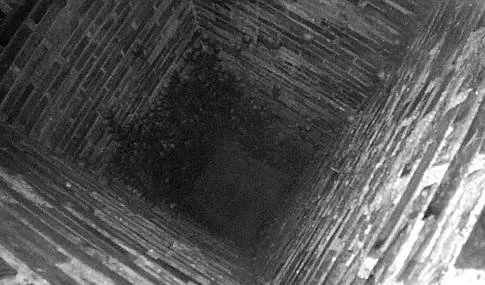
This is an image taken by our IR cam at 6:00 AM, 9/10/12. There are about 5,000 Vaux's Swifts in that pile.
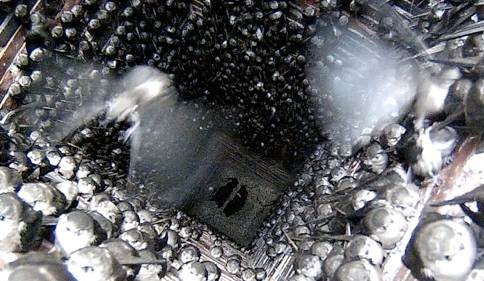
Two hours later, things are warming up outside. The swifts have unpiled, spread out, and are heading for the exit. It'll soon be time for breakfast.
Comparing Roost Sites
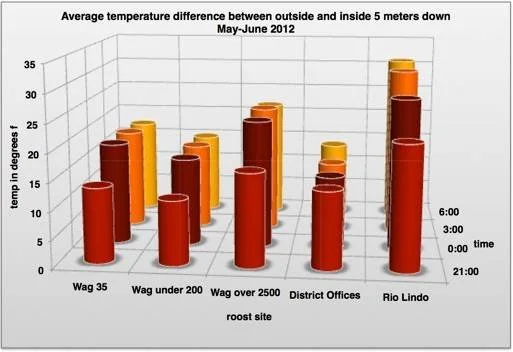
All chimneys are not created equal. So far (Feb 2013) we've only put our loggers into three chimneys. Besides Wagner, we have measurements from the Rio Lindo, CA roost site during the 2013 southbound migration, and we recorded 30 days of swiftless early winter temperatures from the Monroe School District Offices alternate roost site.
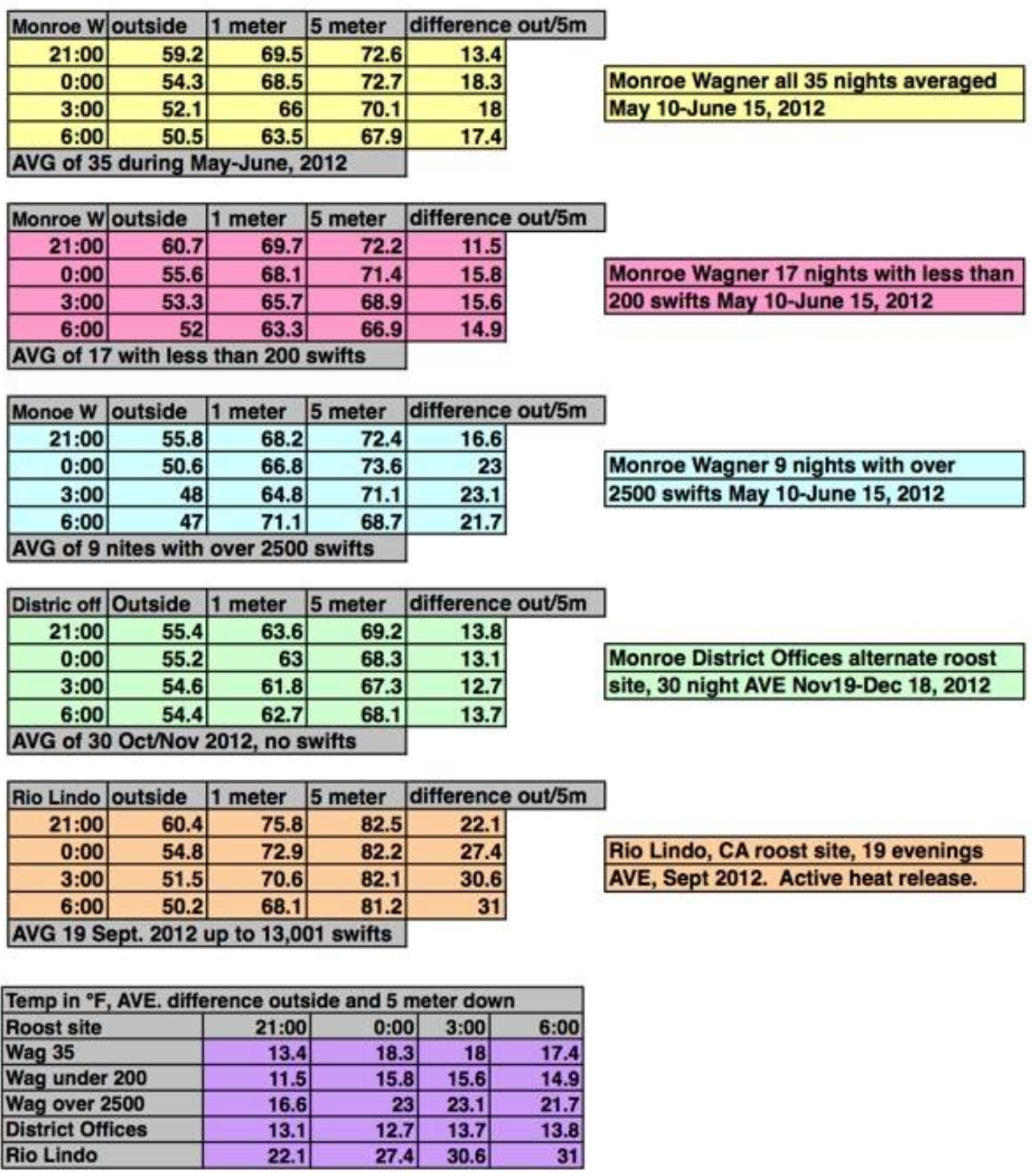
This chart compares these two sites with the Wagner site, broken down into three separate divisions: all 35 of the days we obtained five-meters-down measurements in 2012; just those evenings with fewer than 200 swifts; and the nine evenings with over 2,500 birds.
Study the little bits of colorful spreadsheet below and it should make more sense to you.
The swifts might actually be warmer than the inside air temperatures. They could be pressed against a brick that's slowly releasing heat and totally surrounded by hundreds of their warm-blooded friends. The biggest difference in temperatures for the Wagner northbound migration was over 41 degrees, on 5/11/12, when 5,000 swifts got the inside temperature up over 80 degrees for most of the evening.